Onwards and upwards | October 21, 2012

Position: 17°S, 149°W – Papeete, Tahiti

Eithne in pool mode

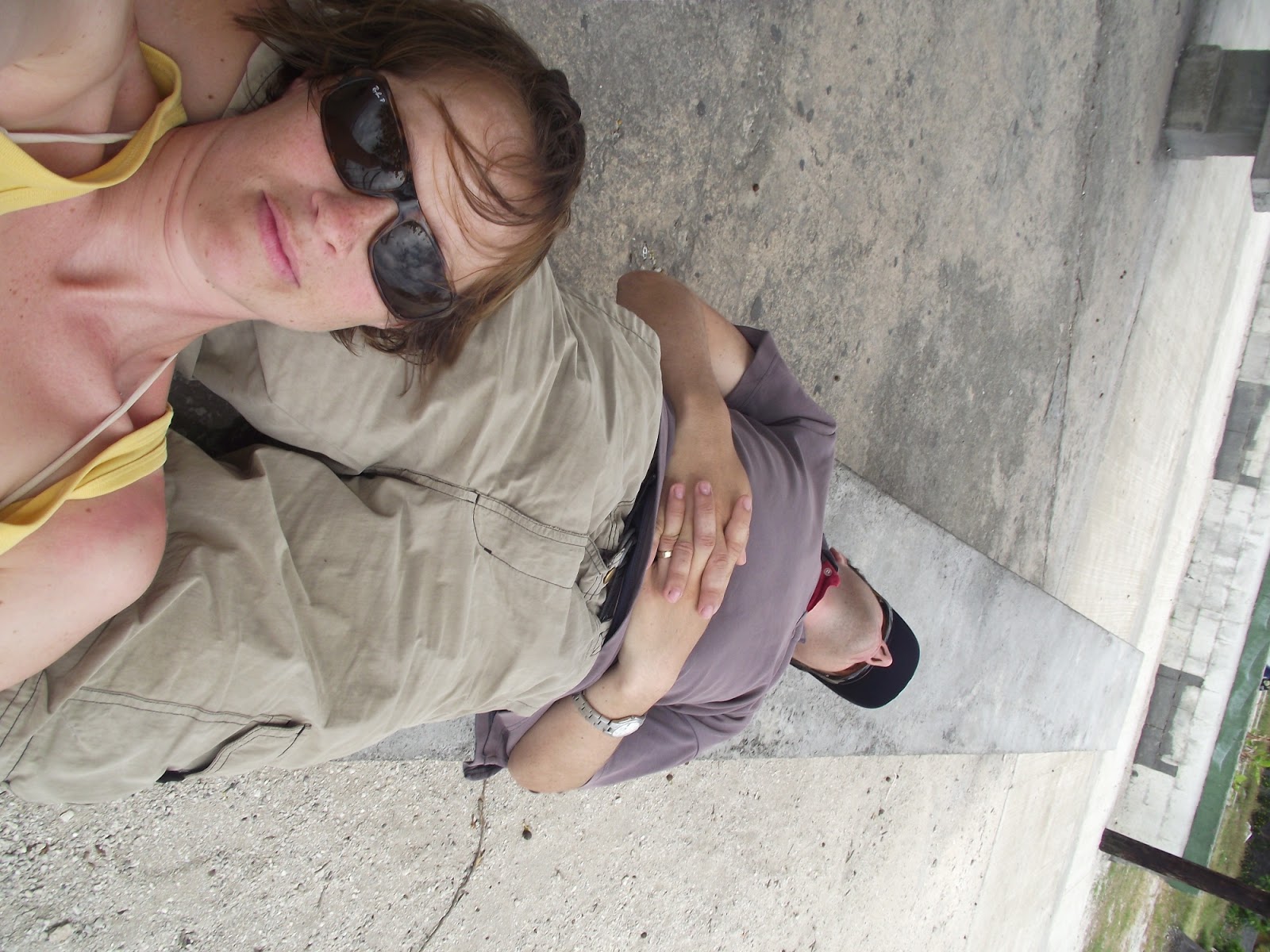
One day off boat duty proved to be addictive – we went on holiday last weekend, splashing out to spend two nights in luxury at the Moorea Pearl Resort and Spa (thanks for the tip Amit Luis, it was even better than we imagined!). Every other couple at the resort was on honeymoon so when the staff congratulated us on our recent nuptials with a complimentary bottle of wine, we decided it was better not to confuse them. For two days we sat by the pool, snorkelled on the nearby reef and kayaked around Cook’s Bay, just like your typical honeymooners. We enjoyed every minute of our ‘weekend away’ and are already looking forward to our next stay on land, wherever it may be. 
The calm before the, er, storm
One of the highlights of our hotel stay was the buffet breakfast. We gorged ourselves both days, starting with the cereal and OJ, progressing to the salami, ham and cheese, before finishing with the full range of the cooked section and a few pain au chocolats to round it all off. A few hours after checking out on Monday and 30km down the road on a tandem bike, the shine started to wear off the buffet breakfast as the Skipper started to recognise the familiar signs of food poisoning. Even the bike seemed to figure out what was coming and wasn’t keen on sticking around to watch the main feature. It promptly lost a bearing and broke down so that we could get a lift home and back to the boat just in time for breakfast to come straight back up. Things seemed like they were about to get a lot worse when the head (toilet) packed it in too but thankfully the Skipper recovered before it got really messy.

With both the head and Skipper back to 100% working capacity, we left Moorea on Thursday and returned to Marina Taina to refill fuel, water, gas and do a laundry run. We’re in the anchorage this time which means that we are treated to unobstructed views of  sunsets over Moorea every evening.  Today we spent a very pleasant Sunday afternoon with our yachtie mates Brian and Sue who are moored nearby, swapping stories and getting advice on different sailing destinations over cups of tea. They are flying to New Zealand for two months in mid-November so we had plenty of travelling tips to give in return.  

Cook's Bay - a nice place to call home for a week

From here we are heading north-east to the Marquesas Islands. This is a change to our original route but from what we’ve heard from other sailors here, they are well worth a visit to experience a more authentic French Polynesia than Tahiti and Moorea. Due to prevailing winds and the approaching cyclone season, Bora Bora and the other leeward islands will have to wait until next time (‘There’s going to be a next time?’ shrieks the First Mate).  
And finally, in advance of a few events taking place this week...
Happy 60th Birthday JJ Sweeney!
Welcome home Kate & Paul!

Trying times in the Tuamotus | October 29, 2012

Position: 14°27'S, 146°02'W - Manihi

After a few farewell drinks and pizza with Brian and Sue, we departed Papeete on Wednesday for the next leg of our journey. The route was straightforward – leave Papeete, take a right and head northeast. Three independent weather sources forecast the wind to be an east-southeast 10-15 knots, perfect sailing conditions for Ashling and a nice way for us to ease ourselves back into it.

Quelle surprise! We rounded the corner from Papeete Harbour and ran straight into our old familiar friend, the 20 knot wind, gusting to 25 knots. Talk about déjà-vu. We initially thought it was convergence effect ("accelerated winds created when the local wind over the island's hills and valleys collides with the dominant wind blowing at open sea" - Skipper) but after two hours, it was still going strong with waves splashing into the cockpit every few minutes. For the hundredth time, we regretted not installing a spray dodger (aka windshield) to shelter the cockpit before leaving Auckland. We also had a few choice words about the weather forecasts for French Polynesia.

We had planned to stop along the way at Rangiroa Island, the second largest atoll and lagoon in the world, but our three attempts over 12 hours were scuppered by strong winds and currents pushing us in the opposite direction to the lagoon entrance. In fairness, we had been calling the island Rangiora (a town in New Zealand) since we heard about it so perhaps our mispronunciation upset the powers that be. So we sucked it up and settled down for another few days at sea in what turned out to be nice, sunny days and clear, moonlit nights.

Sailing under a full moon is a magical experience. It's dark but it's light; it's scary but it's peaceful; you're alone but the moon is with you, watching over you and guiding you along the way. With the wind and waves aligned, the boat ploughs rhythmically through the water, leaving trails of phosphorescence trailing behind. A cloud formation appears every now and then, looking like balls of cotton wool strung together or candy floss strewn across the sky. The breeze is warm and you spot familiar stars like Orion, reminding you that while you may be far from home, the night sky is still the same. Put all that together with Nessun Dorma or the Ministry of Sound pumping on the iPod and it really feels like nature is putting on a show.

Our second attempt to break up the voyage to the Marquesas was more successful. On Sunday, we diverted slightly off our course to Manihi, another island in the Tuamotu group. The Tuamotu islands are different to Tahiti and Moorea as they are coral atolls – circles of land created by underwater volcanos (submerge a large bowl in a sink of water so that just the rim is above the water and you'll get the picture). Historically these islands were known as the 'Dangerous Archipelago' due to the many shipwrecks in the area. The islands are so low that they do not appear until you are almost on top of them. It's quite unnerving - you can see it on the chart, you know it's there, but there's no sign of it. Then suddenly a few palm trees appear on the horizon and voila! It's an island! Thanks to GPS, Jimmy Cornell, Charlie's Charts and anecdotes from many brave sailors over the years, sailing in the area is now more enjoyable, much safer and easier on the blood pressure.

We braved it through the entry pass just after high tide on Sunday evening with the help of a friendly local fisherman, anchored up, sat back and watched a fabulous sunset over a beer. Tomorrow we explore!

Paradise Found in the Dangerous Archipelago | November 5, 2012

Position: 10°28'S, 142°51'W

Manihi is just like those exotic desert islands you see in the postcards, with palm trees bending over white coral beaches and clear water gradually turning to light blue and turquoise.

We took the dinghy to shore and wandered between the trees and colourful shrubs that somehow manage to survive in the volcanic and coral soil. Small huts were hidden among palm trees; some inhabited, some long deserted. Here and there we stepped over fishing buoys and nets, remnants of the once thriving black pearl industry on the atoll. On the ocean side of the land, an orange plateau extended from the white coral beach for 100 metres before dropping off suddenly into the Pacific Ocean. The scenery would take your breath away in any part of the world and seemed even more impressive when we thought about where we were – on a tiny island in the middle of nowhere within a huge ocean! Photos to follow next week when we reach land.

The small population of Manihi is based mainly in the tiny village of Pauea which consists of two shops, a bakery, a town hall, primary school and a Catholic Church (and yes, we went to mass). We took a walk around one afternoon and admired the efforts that the local people have made to keep the village neat, clean and organised e.g. recycling collection points, colourful flowers and shrubs, whitewashed walls of well-kept houses. While the island is by no means affluent, we got the impression that people in Manihi have enough to get by and take pride in working together to make their island a better place to live.

Another day we sheltered from a sudden downpour in the bakery and chatted to a local lady about the island. She explained that the last thirty years have been very good on Manihi due to the black pearl industry (French Polynesia's pearl farming industry began here in the late 1960s) and the opening of a hotel resort on the island. At one time there was a daily flight from Tahiti to Manihi. However today the island's pearl farms have closed and the island's hotel closed in October. There is now just one flight to Tahiti every three days and many of the locals are moving to other islands to find work. It was sad to hear this but she seemed quite stoic, saying "Don't worry, something else will come along, it always does." Desert island living sure does toughen you up.

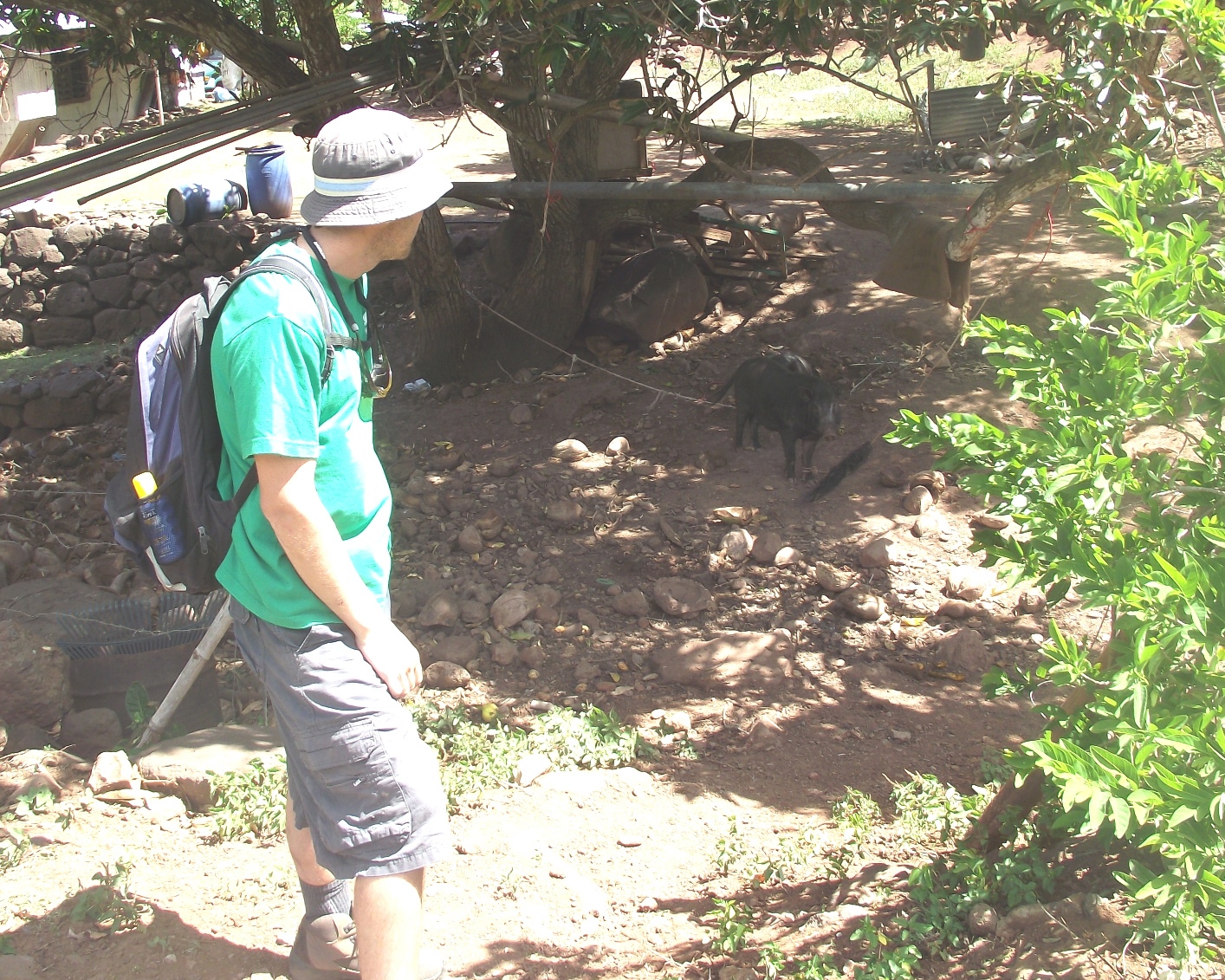
Many reports from other sailors mentioned the high risk of fouling our anchor (getting it stuck) on the coral seabed at Manihi lagoon so the Skipper dug out his snorkelling gear to check out our situation. We had already spotted lots of colourful tropical fish near to shore, darting away as we came close. However our encounters with sealife got a lot more interesting when a shark popped up from beneath the boat just as the Skipper was getting into the water. Lightning speed would probably come close to describing how quickly he jumped back into the cockpit, before realising that it was just a baby, a reef shark about 50cm long. Harmless really, but don't babies have Mummies and Daddies??? 'Reefy' hung around for a while but didn't seem to have brought his mates so Skipper got his game face on (now calling himself the Shark Hunter!) and braved a dive down to find that our anchor was fine, stuck on a coral head alright but removable.

We're back at sea now, slowly making our way to the Marquesas in easterly winds. It's taking longer than it should but the swell is slight, the sun is shining and we're enjoying some pleasant sailing.

The Long Way Round | November 11, 2012


Position: 9°22’S, 140°03’W – Ua Pou

Our route from Manihi to the Marquesas Islands covered 500 nautical miles. The trip should have taken us five days going east. However in this part of the world, the easterly wind is king and the first rule of sailing is that you can’t sail into the wind. So it took us 10 days to reach land, alternating tacks between north-east and south-east to travel 900 miles - in essence, we’ve sailed twice the distance to get here! We grumbled a bit when we found ourselves separated from fresh meat and beer for yet another few days but there was nothing for it, we just had to take what we could get, sometimes making just 75 miles of easting a day.

First glimpse of Ua Pou
Finally we arrived into Hakahau Harbour on the island of Ua Pou (pronounced wa-poo) at 0800 on Friday, accompanied on the final mile by a school of playful dolphins. Our initial impression of the island was that we were arriving into either Ireland or New Zealand – dramatic peaks towered over the island and lush, green hills sat between windswept cliffs. Some parts looked like the Cliffs of Moher, other were like a snapshot of Great Barrier Island.

However there was no mistaking where we were when we disembarked to find the France-meets-Pacific way of life that has now become familiar. People are friendly; the town is kept well with colourful flowers and clean streets, and includes your standard establishments of the town hall, post office, church, graveyard and schools. We have observed one distinctive difference though which makes Ua Pou different to any other island we’ve visited in French Polynesia to date - everyone seems to have a new Toyota Hilux! Either this is a testing ground for Toyota or someone has found a way to make lots of money from something here. 

Our local tour guides
On Saturday we set off to explore the village of Hakahau and befriended a group of young girls who were spending their weekend climbing trees to pick fruit and using stones to crack open nuts that they found under trees. We asked them for directions to a white cross on a hill above the harbour and with nothing better to do for the afternoon, they took it upon themselves to give us a personal guided tour to the top. 

Along the way, their many questions gave us an interesting insight into the life of your average 10 year old Marquesan girl – “Are you married? Do you have children? Why don’t you have children? Do you know how to make children?  Tell us how.” While the First Mate swallowed a smile and wondered how to answer this last one, the ringleader of the group tried to be of assistance - “It’s ok, you can tell us in English if you don’t know the words in French”.

One of the girls was particularly keen to try out our digital camera and take photos of us along the way. We showed her the basics and she snapped away all afternoon, before reluctantly returning it to us at the end of our walk. We flicked through the photos over dinner and found that she was quite the photographer, helped no doubt by her three willing models.


Manihi in the Tuamotus Islands | November 11, 2012


Posting comments - now fixed! | November 11, 2012

The local IT Helpdesk has changed some settings on the blog so that everyone should be able to post a comment now. Fingers crossed it works!

Coconuts and cannibalism in the Marquesas Islands | November 18, 2012

Position: 08°55’S, 140°06’W – Nuku Hiva

Ua Pou turned out to be a real Polynesian paradise. After our encounter with the local children, we popped into Chez Pukuee, a guesthouse in Hakahau, to make a reservation for dinner. When we asked for a menu, the lady of the house called defiantly from the kitchen “It is I who creates the menu. How about langouste?” The Skipper has long since given up learning French but funnily enough he didn’t need a translation for this and almost hugged her as he quickly replied “Oui, oui, merci, merci”. So we dined on lobster with potato gratin, followed by crepes with Grand Marnier and whipped cream. Heaven!
Our hike ended with a swim under a waterfall
Over dinner we discovered that Jerome, the man of the house, was a tour guide for Ua Pou. He invited us to join him on a hike the following morning with some other tourists and we jumped at the chance to see some of the island’s interior and stretch our legs. Starting at 6am, we hiked for six hours to reach the base of one of the famous peaks of Ua Pou. Along the way Jerome pointed out many trees, leaves and berries which are used to make medicine or cosmetics, or simply to serve as good platters for food. Together with the abundance of fruit, vegetables and fish, the islanders really do have all they need here. And a communal style of living, where everyone contributes to feeding their extended family, makes sure that nobody goes hungry.
Our hike started and ended at the home of a friend of Jerome’s, a fellow Frenchman called Piroue. He is a retired French naval officer and has been on the island for many years but comes originally from L’Orient in Brittany. When he heard that the First Mate had spent time in Brittany on language exchanges as a student, he rejoiced in your typical French style, throwing his arms out to his sides as if to welcome home a long lost friend. When he heard of our route, he threw his head and hands to the sky as if to say ‘Where do i start?’ and told us of his naval experiences in the region, stopping at the deserted and dangerous Clipperton Island three times to replace the French flag there. By the time we had returned from our hike, he had big bags of bananas, avocados and grapefruit for us from his garden, and refused to take any money. The next day, one of the other hikers came by the boat with yet another bag of fruit from her garden - passionfruit, coconuts, limes, bananas - again refusing to take anything in return. There’s so much, we don’t know how we’re going to get through it all. This must be how the Marquesans feel.

Rather you than me for dinner, mate 
Leaving Ua Pou behind us, we sailed overnight to the island of Ua Huka which is known for its 10:1 ratio of horses and goats to people. A small museum in the village of Vaipaee was quite interesting and gave us a good insight into life on Ua Huka and the Marquesas Islands of old. Cannibalism was practiced here until the early 1900s, originating from the simple fact that humans were the only available meat to eat - the only indigenous foods in the Marquesas are coconuts, taro and breadfruit. It was only when the Christian missionaries arrived in the mid-1800s that an alternative source of meat was provided through pigs and goats. Eventually the missionaries persuaded the locals that a roast pork was better than chowing down on their neighbour. Lucky for us eh?!
Another interesting aspect of ancient Marquesan culture was the mating ritual. A man could not marry until he had at least one tattoo. Women could not marry until they had been to a special school to learn the art of lovemaking and housekeeping. When a man found himself a woman to marry, he simply said ‘You are mine’ and that was it, no wedding or ceremony required. It was so simple that the men would end up with several wives so it was no wonder then that the diseases introduced with the arrival of the Europeans in the late 1500s spread so quickly to cause the rapid decline of the 100,000 population in the 1900s to just 9,000 today.
On Friday we arrived in Nuku Hiva, the third and final island we will visit in the Marquesas. This is also the last landfall we will make in French Polynesia before embarking on our next ocean passage across the Pacific to Panama. As the administrative centre for the Marquesas Islands, there are more government buildings and officials than on the other islands. There are also lots of other ‘yachts in transit’ in Taiohae Bay where we are anchored. When we checked in with the local police, we glanced through the book entries for other visiting boats. Many have arrived from Panama, taking the traditional ‘milk run’ after having started their trip in Europe or the US. However there a few yachts heading in the same direction as us. The locals call this ‘a l’envers’ (the reverse) as there are much less boats who buck the trend and sail east from Australia or New Zealand, crossing the Americas via the Panama Canal or Cape Horn.
We will stay here for a few days, preparing and provisioning for the 4-5 week trip ahead. There is a hotel in the harbour and a few B&Bs so we may even splash out with the last of our Pacific Francs and treat ourselves to a night or two of luxury on land. It has been a fantastic seven weeks in French Polynesia and we will be sad to leave this part of the world. But as Piroue said to us as we waved goodbye to him in Ua Pou – ‘Seules les montagnes ne se rencontrent jamais’ (Only the mountains never meet).  
The Aranui 3 cruise ship dwarfs Ashling
as it arrives with tourists to visit Ua Pou

Off on another seafaring adventure | November 25, 2012

Position: 04°44'S, 138°49'W

Saturday nights haven't quite been the same since we left New Zealand.
At sea, it's the one night of the week when we have a beer and sometimes
watch a movie. On land, it's usually just the two of us out for dinner
or having a few drinks. Wherever we are, it's generally a quiet affair
so we were delighted to hear that all the villages from Nuku Hiva were
coming together to host a Marquesan cultural festival the Saturday night
after we arrived.

The event reminded us a lot of the evening Maori performances that are
hosted for tourists in New Zealand – heavily tattooed men dressed in
grass costumes start with a haka; a group of young women wearing a
flower behind their ear and patterned dresses shook their hips at the
speed of light; kids from a local school performed a Macarena-type
dance, nervously watching each other to make sure they got it right. The
main drawcard of the event was a young Marquesan singer who recently won
something akin to 'Marquesas got Talent'. He appeared at the end but
instead of swooning teenage girls fighting to get his autograph, the
audience just clapped as politely as they had for the earlier acts.
Either he's not such a big deal after all or Nuku Hiva suffers from the
same Tall Poppy syndrome ("Easy now, don't want him to think he's any
good") we have in New Zealand.

We hired a 4x4 Suzuki jeep for a day to see some of the island and give our legs a rest. We thought the choice of car was overkill but it wasn't long before the nicely paved French roads gave way to country tracks, some of which you would hesitate to tackle even with a tractor at home. Every now and then we would come across a house in the middle of the wilderness and wonder at how people can live in such isolation. It's one thing for the locals to rely on a weekly freighter to stock the island with food and drinking water; quite another for these people be entirely self-sufficient as their nearest neighbour, let alone village, is miles and hours away by dirt track.

Nuku Hiva is different to the other Marquesan islands in that it has
four distinct regions. At sea level, it's hot and humid with sandflies
and mosquitos, which the Skipper can well attest to unfortunately.
However in the high hills of the north-west, there are spruce pine
forests and cool breezes that reminded us of springtime in the
Coromandel, NZ. The east of the island has the most beautiful bays and
beaches but we kept our distance from the waves after a recent encounter with local sealife in Taiohae Bay.

On our first evening in Nuku Hiva, we arrived back at the quay as the
crew of a local fishing boat were chopping up the few tuna they had
caught that day. A fish head went flying into the water and the water
erupted with the rapid flashing of fins and tails. Four sharks were
swimming back and forth by the wall of the quay, waiting for leftovers.
There was no mistaking it this time – these were no harmless, reef
sharks, and they were hungry. Keen to get back to Ashling before dark,
we inched our way down the quay ladder to the dinghy with fear and
trepidation, just centimetres from the sharks. The locals watched in
amusement, nudging each other and smirking at our fear of the local
predators. Then, as if there wasn't enough meat on show already, an
evening breeze came along to whip up Sweeney's skirt as she was on her
way down the ladder. It was a choice between life and modesty – life won
and the locals got a good eyeful of Primark's finest.

First Mate with Rose Corser
As a final treat before setting sail, we spent two nights at Rose
Corser's B&B in Taiohae Bay. Originally from Oklahoma, Rose and her husband Frank arrived in Nuku Hiva on a yacht 32 years ago. They fell in love with the island and ended up staying for life, setting up the island's first international hotel and a museum exhibiting Marquesan arts. After Frank died in 1992, Rose sold the hotel to a local resort chain and now runs a small guesthouse of her own which is much more personable. She is a part of the Nuku Hiva sailing folklore and known to most sailors who visit the island so we were delighted to meet her. She also gave us good advice on where to get drinkable water, gas refills and general provisions.

We're now four days into our second ocean passage across the Pacific and
so far, so good. The average wind speed is 18 knots, the sea is slight
and the sky is clear. The full moon is back again to light our way
through the night and we have the astronomy book out, looking eagerly
for upside-down dogs, bulls and archers.

Some messages for friends and family this week:

Happy 96th Birthday Grandma Dennis!

Best of luck to Duff, Rob, Dermot, Steph & Bryony on the Taupo 160km cycle!


What lies ahead...the Pacific Ocean from Nuku Hiva

Crossing the invisible line | November 28, 2012

Position: 00°22'N, 137°29'W

At 0600 on Wednesday 28 November Ashling and her two crew crossed the
equator in the middle of nowhere. The sterile GPS system didn't blink.
One second it was 00°00.01'S, the next 00°00.01'N and counting.

However the crew made up for this with the required Equator-crossing
ceremony, swigging shots of gin, eating sour fruit and throwing
perfectly good, treasured chocolate overboard while calling out
greetings to appease the Gods of the Sea. All wrapped up in pirate hats
and a rather stylish mankini - you boys at Broadcast Map have a lot to
answer for! Photos may be provided to the highest bidder :)

Settling into the Northern Hemisphere | December 2, 2012

Position: 04°55'N, 133°30'W

Ten days in and so far, it's been a world apart from our New
Zealand-Tahiti ocean passage. The wind has been steady at a comfortable
15-20 knots, the sun has shone every day and the moon has risen every
night. Ashling is sailing well, and the sea and sky conditions are
putting minimal stress on her rig so we are sleeping easy. Crossing the
equator on Wednesday gave crew morale a boost as we ticked off another
milestone on our adventure. The Northern Hemisphere never looked so good.

Now it's on to the hard part of this leg. Over the past ten days, we
sailed mainly north. Now we need to head east. Above us is the
Intertropical Convergence Zone (ITCZ), a belt of squalls and unsettled
weather that sits above the equator. Below us is the south equatorial
current, a current that runs from east to west and would send us back to
French Polynesia. So for the next two weeks, we'll be sandwiched between
both of these, doing everything we can to make our way east.

We are seeing a lot more activity in the ocean on this passage. As we
cracked open our beers for the week at sunset on Saturday, a large pod
of playful dolphins appeared around the boat. We have long given up
trying to capture sea life on camera so we raised our glasses and
toasted the playful creatures, jumping and diving beneath the boat from
port to starboard and back again. At night we often see big, round blobs
of pulsating light in the water around us and think these are some kind
of jellyfish, using light to either search for food or as a defence
mechanism.

Flying fish are a common sight, with many small ones landing up on board
and some adult ones even finding their way into the cockpit some nights.
They never fail to surprise us – our stomachs' sink at any new sounds as
our first thought is that something on the boat has come loose or
broken. However they soon give themselves away with their pungent fish
smell. Then it's just a matter of finding where they have landed and
chucking them back overboard. In any case, all of this evidence of life
in the waters around us has completely disproved the Skipper's
conclusion, after several unproductive fishing attempts, that there are
no fish left in the sea. So the line has been cast out again today and
fingers crossed, we'll have fish for dinner tonight.

On ocean passages such as these, we sail continuously through day and
night. The waters are too deep to anchor in and one of us must be alert
at all times in case of changing weather or sea conditions. So we have a
four-hours-on-four-hours-off routine:
• 0800 – 1200: First Mate on watch, Skipper sleeps. Breakfast.
• 1200 – 1600: Skipper on watch. Lunch.
• 1600 – 2000: First Mate on watch. Dinner.
• 2000 – 0000: Skipper on watch, First Mate sleeps.
• 0000 – 0400: First Mate on watch, Skipper sleeps.
• 0400 – 0800: Skipper on watch, First Mate sleeps.

'On watch' means keeping an eye on what the boat is doing and trimming
sails (loosening or tightening the sail) or making course changes
accordingly. It also means scanning the horizon for any sea traffic or
changes in weather that we should prepare for. So for the next month,
while you are getting up, at work, having lunch, watching TV or going to
sleep in your ever horizontal and stationary bed, one of us is here,
sitting at an angle of between 45° and 80°, watching out for anything
out of the ordinary.